Of Sorcerers and Scientists: Middle-Earth and The Space Trilogy
C.S. Lewis’s Space Trilogy concludes with That Hideous Strength, by far the longest of the three books. As David Whalen observes in Lesson Five of our online course, “An Introduction to C.S. Lewis: Writings and Significance,” many of the trilogy’s antagonists embody the manner in which scientific, progressive modernity has run amok.
In That Hideous Strength, we see this trend embodied chiefly in the National Institute for Co-Ordinated Experiments or N.I.C.E. Staffed by ambitious technocrats, the N.I.C.E. seeks to remake the world according to their brand of radical scientism, imposing order and rationality on chaotic Nature.
Although this pseudo-scientific bureaucracy is a completely “modern” organization by all external appearances, the reader discovers that far more ancient and more sinister powers animate the N.I.C.E. Indeed, the trilogy’s modernist villains even bear a noticeable resemblance to those of a different author: Lewis’s close friend and fellow Inkling, J. R. R. Tolkien.
At first glance, this may come as a bit of a surprise. After all, Tolkien’s characters belong to the mythological, quasi-medieval world of Middle-Earth, which seems far removed from twentieth-century, scientific technocracies.
On further consideration, however, the connections become more apparent. For an obvious one, certain characters in That Hideous Strength refer obliquely to an important prehistoric place called “Numinor,” the True West. As Tolkien would clarify in later publications, the correct spelling was in fact “Numenor,” the Atlantean island of immense significance to Middle-Earth’s larger history. Clearly, Tolkien’s idea of a lost, high civilization influenced Lewis as he crafted That Hideous Strength. But there are deeper thematic connections.
Tolkien sometimes described Sauron as a kind planner or organizer as per his original, uncorrupted intentions, bringing order to the chaos of Middle-Earth. In a long letter to a publisher that explains the larger motifs of his legendarium, Tolkien particularly underscores the problem of “the Machine.” Fall and Mortality, he explains, “will lead to the desire for Power, for making the will more quickly effective.” Eventually, the desire for Power creates “the Machine (or Magic).” The Machine constitutes “all use of external plans or devices (apparatus) . . . with the corrupted motive of dominating: bulldozing the real world, or coercing other wills. The Machine is our more obvious modern form though more closely related to Magic than is usually recognized.”
Consider, as one example, the Rings of Power simply as a narrative device per se. The rings were made through the collaboration of Sauron and the Elves, which Tolkien in that same letter called “a sort of second fall or at least ‘error’ of the Elves,” where they “came their nearest to falling to ‘magic’ and machinery.”
The same theme looms menacingly in the blunt words of Saruman as he attempts to sway Gandalf toward his vision of a brave, new Middle-Earth. “The time of the Elves is over,” declares the wizard, “but our time is at hand: the world of Men, which we must rule. But we must have power, power to order all things as we will, for that good which only the Wise can see.”
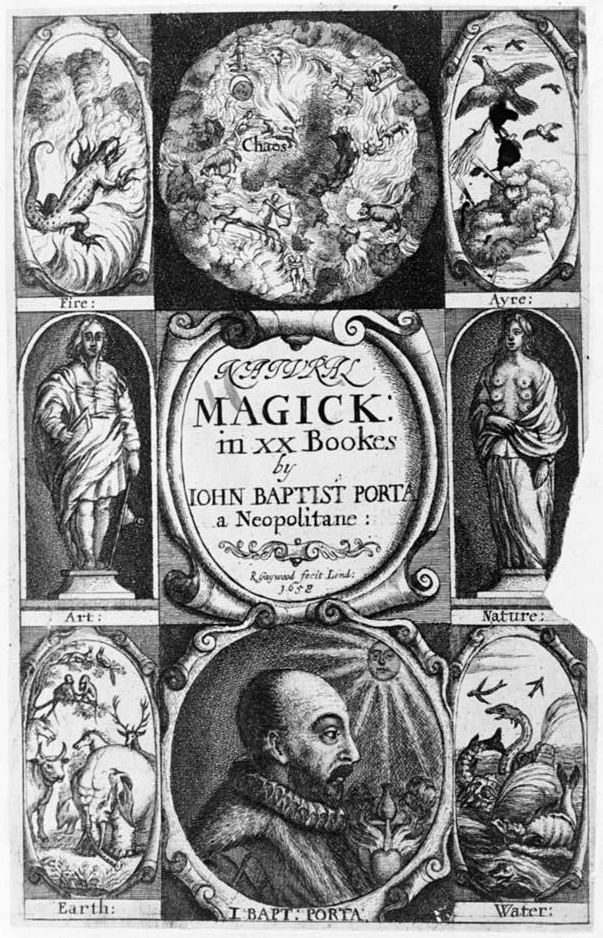
Some of the main villains, then, have a particularly modern flavor, falling to the same temptations and follies as the mid-twentieth-century N.I.C.E. For as Lewis emphasizes in The Abolition of Man, the companion essay to That Hideous Strength, sorcery and science have more in common than we typically imagine. In the early modern era, magic and science largely came out of the very same impulse: desire to control Nature, a motivation one can see in the writings of a contemporary scientific enthusiast such as Francis Bacon.
Magic, Machine, Power: all of these are tainted by the demonic in Middle-Earth—and so too in That Hideous Strength. Thus, while they were working in dissimilar genres, Lewis and Tolkien were attempting to alert their readers’ imaginations to the same kind of moral dangers.