Republicanism and the Administrative State
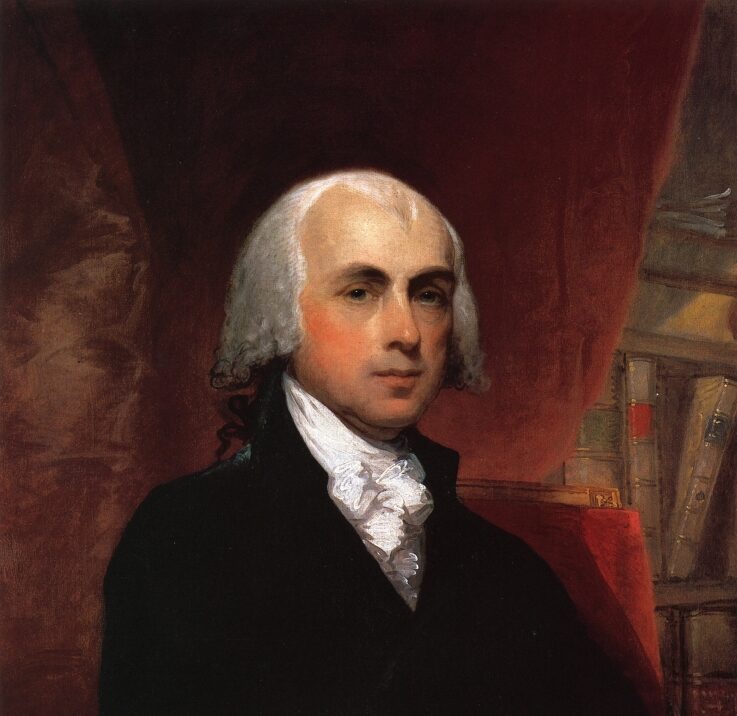
In Federalist 39, James Madison writes that the nation must adopt and maintain a republican form of government, for “no other form would be reconcilable with the genius of the people of America.” As Madison points out, the decisive feature of republican government is that it “derives all its powers directly or indirectly from the great body of the people.” If the people do not ultimately rule, the country can’t have self-government.
As simple as this definition seems, Madison is here applying one of the nation’s foundational principles, stated in the Declaration of Independence: because all men are created equal and are endowed by their Creator with unalienable Rights, governments must derive “their just powers from the consent of the governed.”
Madison goes on to explain in Federalist 39 how the first three articles of the U.S. Constitution arrange the federal government to follow republicanism:
On comparing the Constitution planned by the convention with the standard here fixed, we perceive at once that it is, in the most rigid sense, conformable to it. The House of Representatives . . . is elected immediately by the great body of the people. The Senate . . . derives its appointment indirectly from the people. The President is indirectly derived from the choice of the people. . . . Even the judges, with all other officers of the Union, will, as in the several States, be the choice, though a remote choice, of the people themselves.
However, even though political leaders today may praise our constitutional system or at least aspects of it, the Founders’ republican principles are not sufficiently appreciated. In lecture nine of our free online course, “The Federalist,” R.J. Pestritto illustrates how modern American politics has forgotten the insights of The Federalist and jeopardized the very republican character of America’s constitutional government.
Pestritto discusses how the administrative state, a component of the executive branch of the government, has acquired power that is largely unaccountable to the American people and their elected president. He argues that this development, which took root during the Progressive Era and continues today, would strike Publius as “totally incompatible with his principle of republicanism.”
According to the founding view, the president is the unitary executive of the federal government and should possess control over the government’s administration. As Article II of the Constitution states, “The executive Power shall be vested in a President of the United States of America.” It is the president who has the duty to “take Care that the Laws be faithfully executed.” No one else is vested with executive power under the Constitution. Of course, the president inevitably requires other people to help him administer the laws. Every government requires administrators, but in the constitutional system, those administrators are supposed to follow the directives of the president and be accountable to him.
However, as Pestritto explains, “this basic and very obvious fact from The Federalist and from the Constitution runs counter to an understanding that is prevalent in our politics today really on both sides of the partisan divide.” Now, the modern administrative bureaucracy operates on the contrary premise that administrators are supposed to be independent of the president. Administrators have often been known to defy the directives of the president. In practice, numerous agencies act as if they were entirely divorced from the president’s influence, and nominees for federal agencies are frequently asked during their confirmation hearings to pledge to act independently of the president.
This notion directly conflicts with the standard for republican government laid out in The Federalist.
The fact that many bureaucrats are not accountable to the president under the new administrative model ultimately means that their power doesn’t derive from the consent of the governed. Their power is really unrepublican. Pestritto asks, if administrators are “independent of the president, then exactly whom are they dependent on? Certainly not to voters—administrators don’t run for office. They’re not subject to popular supervision in the way that members of Congress are, or the President is.”
Rather, Pestritto argues that “the only way our system of administration is kept republican is because it is made accountable to a president who is elected.” To the extent that many laws are developed and implemented solely by unelected and unaccountable administrators, the United States erodes its republican character.
Pestritto concludes,
Publius, it turns out, from long ago, is far more democratic than ideas that prevail today. … Publius understands very well, as all of our Framers would’ve understood, that if you have parts of the executive that are not accountable to the president, that are somehow separate from the president, then you have parts of the executive that are not accountable to the Constitution.
Our confused political actors today would benefit from the wisdom of the nation’s Founders, who thought through the first principles of republican government and applied those principles in the political philosophy of The Federalist.